



Get news, updates, and insights delivered straight to your inbox.
AI for Distributed Marketing Teams: Scaling Content Without Chaos

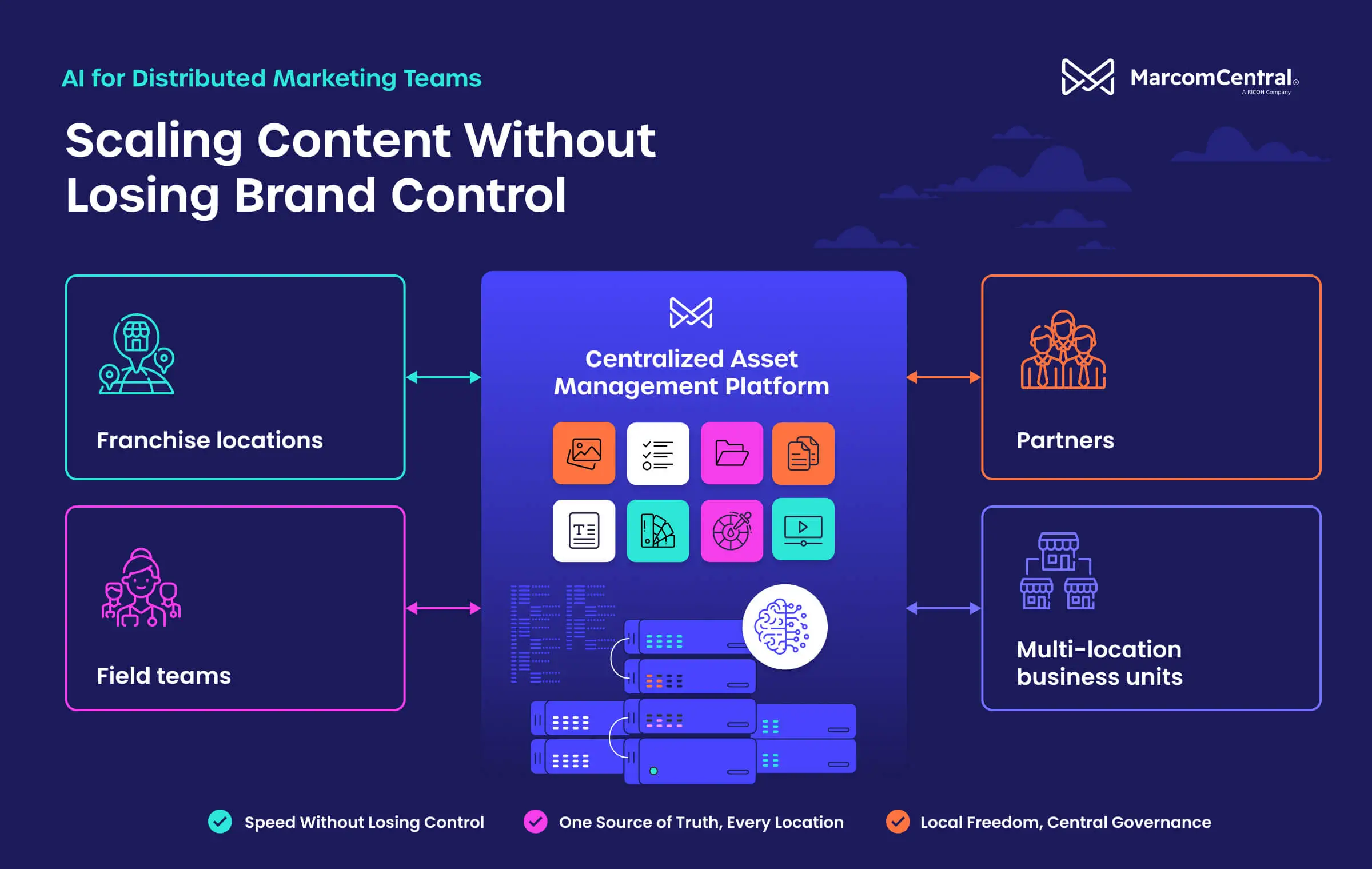
Distributed marketing teams face an uphill climb: they need to create more content for more audiences while protecting brand consistency across every channel. Franchises, field teams, and multi-location organizations all need marketing materials that fit their unique needs. However, everyone has to follow the same brand standards.
AI for distributed marketing teams creates new opportunities to solve this challenge. AI tools can help your team personalize content, find approved assets faster, and reduce repetitive production tasks. However, artificial intelligence also creates new risks when your team doesn’t have clear processes and governance.
The right approach combines AI capabilities with a strong marketing asset management strategy. That way, you can give local teams the flexibility they need while keeping every customer interaction aligned with the brand.
What Does “Distributed Marketing” Mean in the AI Era?
Distributed marketing is a model where multiple teams create, customize, or distribute marketing materials across different locations or business units. Instead of one central marketing team managing every campaign, local teams contribute to marketing execution.
AI for distributed marketing teams lets you create more content faster. That speed allows teams to respond faster to local market needs, but you need a system to prevent inconsistent messaging or unauthorized brand changes. Combining artificial intelligence with centralized asset management makes this model scalable.
Franchise, Field Teams, Partners, and Multi-Location Brands
Distributed marketing is common in organizations with many locations or customer-facing teams. Healthcare networks and franchises are common examples.
AI for distributed marketing teams supports all of these locations by providing greater access to approved resources. However, these teams need some flexibility to adapt to the preferences of their audience niches.
Why AI Raises the Stakes for Brand Consistency
Artificial intelligence makes it easier than ever to create content. A team member can generate copy, images, layouts, and campaign ideas with little effort. While this ability improves productivity, it also exponentially increases the number of marketing materials created across an organization.
Without proper guardrails in place, local teams could be creating content with outdated logos, incorrect messaging, or unapproved claims. These issues can erode customer trust and create compliance concerns.
The Core Challenge: Speed and Volume vs. Brand Control
AI for distributed marketing teams solves the speed and volume problems, but it makes brand control even more difficult to exercise. The question is not whether you should use AI. The challenge is how you can use AI without creating chaos. Successful distributed marketing programs balance speed with control. They give teams the tools to create content while maintaining clear boundaries around brand usage.
More Local Teams Creating Content, Faster Than Ever
Local teams understand their audiences better than centralized marketing departments. They know the communities they serve and the customer concerns they face. AI gives your team the ability to act on those insights. A local marketer can create personalized campaign ideas, adjust messaging, or develop content variations quickly.
However, more creators mean more opportunities for inconsistencies. When every team creates content independently, you can lose visibility into what’s being made and shared. A centralized system allows you to support creativity at the local level while maintaining brand alignment.
The Risk of Off-Brand, Inconsistent, or Non-Compliant Materials
A single piece of incorrect content may seem minor, but repeated inconsistencies are something your audience will pick up on. When your content includes inconsistencies, it can damage trust among customers. Depending on the industry you operate in, problems with marketing content can also create legal liability and compliance headaches.
Why “More Content” Isn’t the Same as Better Marketing
AI can help you create more content, but quantity alone does not improve marketing performance. Effective marketing requires the right message, the right audience, and the right channel. A hundred pieces of inconsistent content may produce less value than a small number of well-designed, targeted campaigns.
Therefore, your distributed marketing team needs tools that help them create useful content instead of simply producing more materials. Don’t fall into the more content trap. Instead, use AI to work more efficiently and deliver better assets that resonate with your audience.
Where AI Helps Distributed Marketing Teams
AI provides several advantages for distributed marketing teams when organizations build the right foundation. It can reduce repetitive work, improve content discovery, and help teams customize materials for specific audiences. The most successful organizations use AI as a productivity tool while keeping humans involved in strategy, approval, and brand decisions.
Speeding Up Content Personalization for Local Markets
One of the clearest advantages of artificial intelligence is that it allows you to personalize content much faster. Customizing content for local markets is crucial when you are working with distributed teams. AI helps your employees tweak content without starting from scratch. This represents a huge time savings while enabling you to speak to the needs of each audience segment.
Reducing Manual Design and Production Work
Marketing teams spend a significant amount of time creating redundant materials that probably already exist somewhere in your content ecosystem. AI can reduce this workload by helping teams generate drafts, resize assets, and automate routine production tasks.
Automation works best when your teams start with an approved design and template. AI should support existing brand systems instead of replacing them.
Surfacing the Right Assets Faster With AI-Powered Search and Tagging
Finding the right marketing asset can be a frustrating task for distributed teams. Employees may waste hours searching through old folders and shared drives. AI-powered search and automated tagging make it easier to locate approved assets quickly. Your team members can search based on keywords, categories, campaign details, or other elements.
Where AI Alone Creates Chaos Without the Right Guardrails
Artificial intelligence does not understand the requirements of your brand or the unique voice you’ve built. Without clear guardrails, distributed teams may use AI in ways that create more problems than they solve. You need processes that define how teams use AI and which assets they can access.
Here are common dangers associated with AI for distributed marketing teams that you must address:
No Central Source of Truth for Approved Assets
Distributed teams often struggle when they store marketing materials in various folders or shared drives. Employees may find multiple versions of the same logo, outdated brochures, or old campaign files without knowing which resources they should use. AI won’t fix a disorganized asset library. It can actually make the problem worse by helping teams create more content from unreliable resources.
Local Teams Bypassing Brand Guidelines to Move Faster
Local teams are in the hot seat to create great content quickly. When they can’t find approved materials, they may create their own versions to meet customer needs. This behavior usually comes from a lack of access rather than a lack of commitment to the brand. Teams want to move quickly, but they need tools that make compliance the easiest option.
Lack of Visibility Into What’s Being Created and Distributed
When you use a distributed marketing model, your corporate team may lose sight of what local teams create and which campaigns perform well. Without accurate reporting, your organization cannot identify opportunities to improve its marketing program.
Usage analytics provide insight into asset performance, user behavior, and content adoption. AI can help you uncover patterns within the data and make better decisions.
Building a Framework to Scale AI Content Without Losing Control
If you’re ready to adopt artificial intelligence to support your distributed marketing teams, you need to build a framework that combines processes and governance. A strong framework allows local teams to create content quickly while giving corporate teams the visibility they need to protect brand standards.
Centralizing Brand Assets Before Introducing AI Tools
Adding artificial intelligence to a chaotic collection of brand assets will make the problem worse. Get your marketing assets organized and implement a single source of truth for storing content. When teams have a single source for accessing approved resources, AI becomes an asset instead of a liability.
Locked Templates: Giving Local Teams Freedom Within Boundaries
Templates help your organization balance flexibility and control. You can lock non-negotiable elements of the template, such as your logo and brand colors. Local teams can customize materials for their audiences without changing important brand elements.
Approval Workflows That Don’t Slow Teams Down
Traditional approval processes create delays, which can lead to missed opportunities in a fast-moving market. Modern approval workflows create a better balance. You can identify which materials require detailed manual review and which approved templates local teams can use without additional steps.
Usage Analytics to Monitor What’s Working Across Locations
Analytics capabilities reveal which content is performing the best, and where it is being used. You can build on your wins and revamp or retire content that isn’t working.
What to Look For in a Platform Built for Distributed Marketing Teams
The right technology platform helps you scale marketing without sacrificing control. Your distributed teams need tools that provide the following:
Centralized Digital Asset Management With AI-Powered Search
A digital asset management system creates a single source of truth for marketing materials. AI-powered search makes those resources easier to find. Together, these capabilities enable local teams to tap into your full library of content.
Customizable, On-Brand Templates for Non-Designers
Not every distributed marketing user has design experience. Templates help non-designers create professional marketing materials without requiring specialized skills. The best platforms allow organizations to create flexible templates that protect brand standards while supporting customization at the local level.
Role-Based Access and Approval Workflows
You can limit what each user can access based on their role. Custom approval workflows add another layer of control by helping your organization review content.
Integrations With Existing MarTech and Communication Tools
Marketing teams rely on multiple solutions to communicate with customers and achieve brand goals. You need an AI solution that integrates with the tools you are already using. Connected systems create a smoother experience for both corporate marketing teams and local users.
How MarcomCentral Helps Distributed Marketing Teams Scale With AI
MarcomCentral serves clients in a variety of industries, including finance, healthcare, and manufacturing. Our powerful asset management solution includes the tools you need to protect your brand image and promote trust with your audience.
Centralize: One Portal for All Approved Brand and Marketing Assets
MarcomCentral gives you one location for approved marketing materials. The team can access current assets without searching through disconnected systems or relying on outdated files. A centralized portal promotes efficiency because users can quickly locate the resources they need.
Customize: Locked, On-Brand Templates for Field Teams, Franchises, and Partners
MarcomCentral helps you provide local teams with flexible templates that protect brand elements. Lockable templates are a key offering in our asset management solution.
MarcomCentral Core is a streamlined solution for smaller businesses that do not require the full suite of tools. Core is more accessible but still includes the foundational features that our platform is known for, including lockable templates, a centralized asset storage solution, and a user-friendly interface.
Distribute: Multi-Channel Delivery With Usage Analytics and Reporting
Creating content represents one part of distributed marketing. You also need a way to deliver those materials across channels. MarcomCentral helps you distribute approved marketing resources while tracking usage and performance.
Request a demo of MarcomCentral to learn more.
FAQs
What Is Distributed Marketing, and How Does AI Change How It’s Managed?
Distributed marketing allows decentralized teams and business locations to create and distribute marketing assets. AI increases content creation speed and makes it easier for local teams to personalize assets.
How Can Marketing Teams Use AI Without Sacrificing Brand Consistency?
You need to set up clear guardrails and use locked templates to use AI without compromising brand consistency. AI should support your existing brand guidelines instead of replacing them.
What’s the Risk of Letting Local or Field Teams Use AI Tools Without Oversight?
Local teams may create inconsistent messaging or use outdated assets if you do not adequately oversee their activities. AI makes content creation easier, but you still need governance to protect the customer experience.
What Features Help Distributed Marketing Teams Scale Content Production Safely?
Digital asset management and customizable templates help your team scale up content production safely. Role-based permissions and approval workflows are other essential features needed to protect your brand image.
How Does MarcomCentral Support Brand Governance for Distributed and Franchise Teams?
MarcomCentral provides a single source of truth for content and offers customizable templates, as well as role-based permission settings.
You might also like

Where AI Content Governance Breaks Down Across Franchise & Partner Networks (and How DAM Fixes It)
Read More
When to Move Off Dropbox and Shared Drives: A Brand Portal Software Readiness Checklist
Read More