Get news, updates, and insights delivered straight to your inbox.
Coffee Shop Marketing Strategies

When you are operating a single neighborhood cafe, you can rely on your uniqueness to stand out. Your marketing plan does not have to account for scalability or subtle differences in adjacent markets.
However, for coffee shop owners who want to branch out, creating a consistent and adaptable marketing plan can prove challenging. It’s also a necessity.
Effective coffee shop marketing strategies are about much more than simply creating great visuals, although that is part of the equation. You need to build repeatable systems that resonate with your customer base, bring in foot traffic, and promote customer loyalty.
Every message from every one of your locations must stay on-brand and align with what people know and love about your coffee shop business. Here’s everything you need to know about building impactful marketing strategies for coffee shops that will win new customers
FREE COFFEE SHOP MARKETING STRATEGY GUIDE
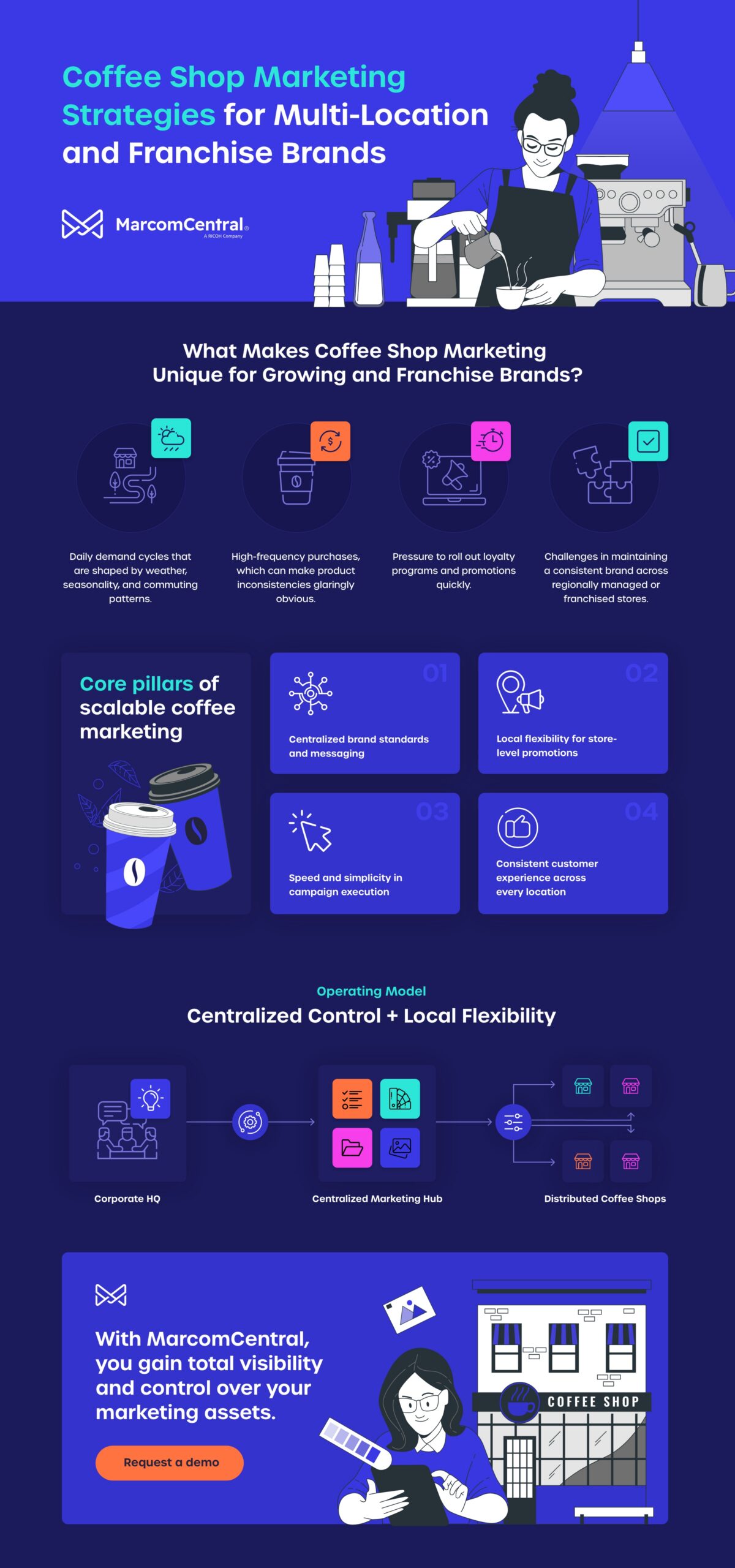
Download our visual guide covering marketing strategies for multi-location and franchise coffee brands.
Download the Free Strategy Guide
What Makes Coffee Shop Marketing Unique for Growing and Franchise Brands?
Coffee shop marketing strategies for single-location businesses don’t need to be scalable. Owners don’t have to worry about going off-brand because they have direct oversight of everything. But local coffee shops that are expanding or beginning to franchise face unique challenges.
These businesses already work in one of the most competitive and fast-paced retail environments, due to:
- Fluctuating demand
- High customer expectations
- Hyper-local competition
Each location adds to the complexity. These companies’ coffee shop marketing strategies must enforce corporate brand standards while allowing local managers to address needs in their neighborhoods. All the while, they must operate on tight timelines with limited resources.
Here are some of the key factors that make marketing strategies for coffee shops unique:
- Daily demand cycles that are shaped by weather, seasonality, and commuting patterns
- High-frequency purchases, which can make product inconsistencies glaringly obvious
- Pressure to roll out loyalty programs and promotions quickly
- Challenges in maintaining a consistent brand across regionally managed or franchised stores
Without a centralized system, your marketing efforts will become fragmented. If the rules are too vague, your shops will operate like independent local businesses. They may go off-brand, damaging trust and credibility.
Alternatively, if you don’t allow for flexibility, your marketing campaigns can get bogged down by rigid rules. You and your leadership team won’t be able to tailor each location’s strategy to fit consumer preferences.
Either outcome is unacceptable.
What Is a Modern Coffee Shop Marketing Strategy?
A modern marketing plan for coffee shops is all about continuity and cohesiveness. Instead of building one-off campaigns that lead to short-lived results, you should focus on creating a repeatable framework for execution.
A great strategy will prioritize the following goals:
- Repeat visits and loyalty
- Local relevance
- Word-of-mouth reputation building
- Speed and efficiency
- Clarity for employees
When you are overseeing multiple stores, you have to think big picture. This means raising brand awareness and optimizing customer engagement through unified content and messaging that promotes your core values. Local teams don’t have the time or resources to reinvent assets or interpret brand guidelines on their own.
Common Marketing Challenges for Multi-Location Coffee Shops
Building coffee shop marketing strategies that drive results means overcoming several key hurdles.
Inconsistent Branding Across Locations
Imagine that you turn each store manager loose and allow them to create their own digital marketing content and physical signage.
While some will stick with the brand’s approved assets, there are bound to be some inconsistencies that damage your reputation. That can create a snowball effect that causes long-term harm to customer loyalty and your bottom line.
When people go to their favorite coffee shop chain, they expect consistency across the board. This includes everything from the shop’s atmosphere to the service quality to the drink itself. Without centralization, there’s a chance that menu items, promotional offers, and messaging vary from one shop to the next.
Slow Rollout of Promotions and Seasonal Campaigns
The coffee shop industry is fast-paced. Industry giants are known for major seasonal rollouts and limited-time offers. Your business needs to keep pace. However, rolling out promos and seasonal campaigns becomes challenging if you lack a centralized system for sharing assets with your managers.
The result? Potential customers and long-time loyalists miss out on some of your most promising items. Bungling this chance to boost sales can lead to huge profit losses, while employees and customers lose confidence in your products.
Staying engaged with the local community while promoting uniformity of seasonal marketing tactics is a critical balancing act.
Overreliance on Local Teams for Asset Creation
Store managers are focused on operations, and a good barista’s primary goal is delivering great coffee and exceptional service. They don’t have the time or bandwidth to create assets for your target audience.
Asking local stores to create or customize marketing materials increases the risk of your brand identity getting lost in the shuffle. Even if they deliver strong content that aligns with your coffee shop brand, it will distract from their other responsibilities.
While each shop’s team should be given some freedom to customize content for local events and the demographics they serve, you need to provide clear guardrails. For example, outlining which template elements they are allowed to customize makes it easy for them to create targeted email marketing campaigns and other content for local coffee drinkers.
Limited Visibility Into Which Marketing Materials Are Being Used
Do you know which assets your store managers are using on social media platforms like TikTok and Instagram? Does your current system provide analytics data about posts and emails that deliver high-quality leads?
If you don’t have a centralized platform in place, all of this valuable information remains out of reach. Your leadership team will lack insight into whether stores are using the correct assets, or any assets at all.
Without this data, it becomes difficult to build momentum in adjacent markets. Instead, each store is left to figure out what works and what doesn’t on its own.
Managing Digital and In-Store Marketing Simultaneously
To build loyal customers, you need to deliver a cohesive experience. This means that your digital and physical marketing assets must work together. Without coordination, digital and in-store interactions become disjointed.
You need an online presence that reflects your core values while speaking to the type of experience coffee shop customers will enjoy when they step into your business. Consistency promotes customer retention and is critical for longevity.
Core Pillars of Effective Coffee Shop Marketing Strategies
Before you craft a marketing plan for your coffee shop, identify the key tenets that will make your efforts impactful. Start with these pillars of effective marketing strategies.
Centralized Brand Standards for Messaging
First, create a single source of truth that all managers and franchise owners can turn to for guidance. This central repository needs to include the following:
- Brand guidelines
- Approved assets
- Messaging and templates
When a store manager needs assets for promotions or community events, they will know just where to look. They can find a template that suits their needs, customize it, and deploy the deliverable in their local market.
You can enjoy peace of mind knowing that only approved assets will be used, and the manager will enjoy the freedom to serve customers in their market in the way that they see fit.
Local Flexibility for Store-Level Promotions
Providing stores with flexibility allows them to customize messaging, dates, and special offers to fit the local audience. It also demonstrates to managers that you trust their judgment and market knowledge.
Create a marketing strategy that provides clear guidance for planning regional events and location-specific offers. Outline what managers can and cannot do on their own, as well as what types of events or offers require corporate approval.
Building flexibility into your marketing plan will lead to faster approval workflows and better agility across the entire network of shops.
Speed and Simplicity in Campaign Execution
The marketing systems you implement should reduce friction and make it easy to launch campaigns quickly without time-consuming oversight.
The coffee shop niche values speed and agility. When your shops can adapt quickly, it enhances your ability to stay connected with consumers and deliver consistent sales volume.
Consistent Customer Experience Across Every Location
Most coffee shop regulars have a preferred location that they typically frequent. Others may have two to three different spots that they hop from, depending on their day-to-day needs and schedules. Your goal is to give them a familiar brand experience, whether they visit one store or ten.
Every regular customer expects a cup of coffee that tastes great and is just like the one they order at their preferred shop. But that’s just part of it. The menu, drive-thru setup, and online ordering process need to be polished as well.
When a customer knows they can visit any one of your stores and have a great experience, their sense of loyalty is going to grow.
Marketing Strategies for Coffee Shops Managing Multiple Locations
Repeatability is one of the core goals of developing a scalable marketing strategy for coffee shops. To achieve that across every location, you will need the following in your toolkit.
Centralized Marketing Hubs for Brand and Store Teams
Invest in a platform that centralizes and organizes all of your marketing assets. A single source of truth allows your corporate team to control brand assets while giving stores easy access to approved materials. This eliminates confusion and reduces redundant requests for approvals, materials, or marketing guidance.
Customizable Templates for Local Promotions and Signage
Templates are one of the most valuable resources you can provide local teams.
Offer templates with locked and unlocked elements. Locked elements will protect your brand image and reputation, while unlocked components give local shop managers the opportunity to run their own promos, online ads, and in-store marketing. For example, you may allow them to customize dates, addresses, and in some cases, prices.
Seasonal, Limited-Time Offers Rolled Out at Scale
Holiday drinks and festive menu offerings are staples in the coffee shop industry. With centralized distribution, you can launch seasonal campaigns across all locations simultaneously.
Making sure that all of your stores are launching new products on the same day allows you to give customers the seasonal trends they desire while promoting company-wide consistency.
Empowering Store Managers Without Sacrificing Brand Control
If you want shop managers to be loyal to the company and its mission, you must make them feel empowered and supported. However, you cannot sacrifice brand control or compromise the reputation you’ve worked so hard to build. There is a happy middle ground.
A centralized asset management system allows you to equip managers with marketing tools and customizable assets. They can experiment with different local offers and branded assets to see what works in their market. However, you will retain control over the most important elements of your brand, such as the logo, color scheme, and slogan.
Driving In-Store Traffic and Repeat Visits With Brand-Led Marketing
The impression you leave on in-store customers will have a huge impact on your bottom line. But first, you’ve got to get them in the door.
Consistent, on-brand promotions reinforce a feeling of familiarity and encourage repeat visits. When every location displays the same loyalty messaging and seasonal beverages, customer trust will rise. Brand-led marketing supports:
- Stronger recall and recognition
- More predictable customer behavior
- Increased participation in loyalty programs
- Higher attachment rates for promoted items
Importantly, these outcomes don’t rely on costly paid media campaigns. The key is to show up consistently wherever customers interact with your brand.
Aligning Digital and In-Store Coffee Shop Marketing
Customers experience your coffee brand online, in-person, and in every cup of java they buy. Often, they will encounter several touchpoints in a single day. When there are discrepancies, those variations stand out in the worst way. But when you are consistent online and in-store, each touchpoint reinforces the next.
Here are some areas where you should prioritize alignment:
- Menu boards that match digital menus
- In-store signage that reflects social promos
- Seasonal campaigns across all formats
- Consistent messaging in print and digital assets
When digital and in-store marketing work together, the brand feels intentional, not fragmented. Your customers will pick up on the difference, too.
Supporting Franchise and Regional Coffee Marketing Teams
If you are overseeing a franchise or regional model, be prepared to face additional challenges. Corporate teams must give franchisees and regional management some autonomy while still promoting brand consistency.
Striking this balance can be quite challenging. Here are some tips:
- Offer preapproved, ready-to-use assets
- Include clear usage guidelines in each template
- Provide centralized updates to prevent outdated assets from being used
- Promote visibility into adoption and usage trends
To succeed, you’ll need a centralized, cloud-based platform that promotes asset distribution and management at scale. Such a solution removes friction so that you can spend less time policing execution and more time winning customers.
Measuring Coffee Shop Marketing Execution Across Locations
Customer-level metrics are important, but they don’t tell the whole story. You also need to gauge execution quality by measuring:
- Which assets are being used
- Where campaigns are fully adopted
- Which locations lag behind
- How quickly promotions are deployed
The better visibility you have into regional and local marketing efforts, the easier it will be to identify gaps and continually improve your plan.
How Scalable Platforms Support Coffee Shop Marketing Growth
As your coffee brand grows, spreadsheets, email attachments, and shared drives are no longer viable options. To support continued expansion, you need a scalable solution that includes purpose-built tools for the food and beverage industry. With the right platform, you can:
- Centralize brand assets and templates
- Control customization without restricting flexibility
- Accelerate campaign rollouts
- Maintain consistency across every location
These platforms remove bottlenecks, reduce risk, and enable managers and marketing teams to flex their creativity.
Building Scalable, Brand-Consistent Coffee Shop Marketing
The most effective coffee shop marketing strategies rely on a complete digital asset management solution to carry out the principles outlined above.
With MarcomCentral, you gain total visibility and control over your marketing assets. Our user-friendly platform empowers local shop managers to customize content and promote the brand at speed.
Request a demo to learn how MarcomCentral supports marketing strategies for coffee shops.
Frequently Asked Questions
What Are the Most Effective Coffee Shop Marketing Strategies?
The most effective marketing plans prioritize speed and consistency. No matter which shop someone visits or where they interact with your company, the experience should feel familiar.
How Do Coffee Shops Maintain Brand Consistency Across Locations?
Centralizing brand standards and distributing approved templates will promote consistency. You also need to implement systems that prevent unauthorized changes while still allowing for local customization.
How Can Multi-Location Coffee Brands Scale Seasonal Promotions?
Seasonal promotions scale best when your assets are distributed centrally and launched simultaneously across all stores. That way, every shop is on time and on-brand.
Why Is Centralized Marketing Important for Coffee Shop Chains?
Centralizing your marketing assets reduces the risk of errors and speeds up execution. It also allows you full visibility into how content is being used, making growth more predictable.